
Laura was the first to notice something was off. In fact, she had mentioned that for the past couple of months, she had noticed we were taking longer and longer to walk to our regular haunts in town. I was walking to church in Amsterdam in March 2021, moving at my usual unhurried pace, when Laura walked up behind me (she had gone back to our apartment to grab something) and mentioned again that my gait looked different. I couldn’t feel anything unusual, and at the time, I trusted what my body wasn’t telling me. I didn’t know it then, but those early signs were laying the groundwork for the traveling with limited mobility tips we live by today.
When we got home in the summer of 2021, I climbed onto the treadmill, eager for a familiar run. That’s when I noticed my right toe dragging, again and again, no matter how I adjusted my stride. Our eldest daughter had also noticed my gait had changed and asked why Dad was “walking funny”. After many tests and at least three doctors, it wasn’t until March of 2023 that I finally had a diagnosis: Primary Lateral Sclerosis. PLS affects the upper motor neurons, often showing up as stiffness, muscle weakness, balance issues, and a gradual change in how you walk. We didn’t stop traveling, but we did start traveling differently.
Our baseline: what “limited mobility” means for us
Limited mobility looks different for everyone, so I want to be clear about what it means in our day-to-day travel. I can walk independently, but my pace is slower, my balance isn’t always predictable, and long stretches on uneven ground, cobblestones especially, are harder to traverse than they used to be. Stairs without railings, standing in long lines, and rushing between connections are where balance problems show up fastest.
Laura and I learned early on that pretending those limits don’t exist only makes travel harder. Before PLS, I moved in step with Laura. But Laura has always been the kind of traveler who stops to notice details, a doorway, a flower box, the way light hits a mossy-covered stone wall, while I was usually focused on getting from point A to point B. So the effect was that I typically had to wait for her.
Now, we plan around how my body behaves, not how we wish it would. Ironically, the slower pace has brought us closer together. Laura can stop and “smell the roses,” knowing she’ll easily catch up, while I still prefer to push on like I’m rucking with the Marines. She often takes the lead on navigation and timing, while I focus on pacing and knowing when it’s time to stop. That shared awareness has reshaped how we travel, making our trips calmer and more purposeful, not less.
The planning shift that changed everything
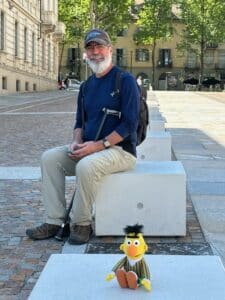
The biggest change we made was learning to plan for energy instead of distance. I used to judge a day by how much ground we covered or how many points of interest we would see, but that mindset stopped working once limited mobility became part of our travels. Laura and I now start by asking a quieter question: How much does this day ask of us physically?
Most days are built around one meaningful anchor, attending Catholic Mass, a museum, a neighborhood walk, a beach, or a scuba dive, then the rest of the day is left intentionally open. We pay attention to surfaces, stairs, seating, and how long we’ll be on our feet before there’s a chance to rest. Gelato shops always have places to sit and rest. People who traveling with limited mobility often focuses on what to avoid, but for us, it’s about choosing well. A slower pace means we notice more, arrive less tired, and end the day still enjoying each other’s company rather than counting steps back to the hotel.
Challenging myself, carefully and with resolution
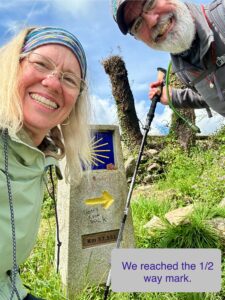
Even as we adapted to our new travel style, I didn’t want limited mobility to shrink what I believed I could accomplish. In the spring of 2025, walking the Camino de Santiago became a kind of proving ground. I knew it would be demanding, but I also knew it would teach me something honest about my limits. Laura and I approached it deliberately, paying attention to terrain, daily distance, and recovery rather than tradition or bravado.
Some days were hard in ways I expected; others surprised me with how manageable they felt. The Camino showed me that traveling with limited mobility isn’t about avoiding challenges altogether but about choosing the right kind of challenges. I learned where my stamina holds, when I need to stop, and how much pacing matters. That experience didn’t make travel easier, but it made me more confident in what I can still say yes to.
For tips on how we pack for long-term travel, like the Camino, read our Incredible Tips on How to Pack for a Long Trip.
Getting there: airports, flights, and traveling with limited mobility
At some point, our adjustments stopped feeling like one-off fixes and started forming a pattern. These aren’t rules, and they won’t look identical for everyone, but they’re the traveling with limited mobility tips we come back to trip after trip. Each one grew out of experience, usually after learning the hard way.
- Build generous layovers into every flight day
I try to keep layovers to at least 1.5 hours whenever possible. That extra time absorbs delays, slower walks between gates, and unexpected terminal changes without turning the day into a stress test. Laura and I would rather arrive early and calm than sprint and unravel. - Use airline lounges to reset, not just to wait
Lounges give us something airports rarely do: a place to sit comfortably, eat at our own pace, and use restrooms without standing in long lines. Those breaks protect energy and make multi-leg travel days feel manageable instead of punishing or strenuous. - Use simple mobility aids as tools, not labels
I use a cane in airports, not because I can’t walk without it, but because it helps me move a little faster and more steadily. It also quietly signals to others that I may need a bit of space, which reduces friction more than I expected.
These habits didn’t appear all at once. They accumulated over time, shaped by what worked, what didn’t, and a growing respect for how much energy a travel day really asks of us.
Hotels and rentals: the details that matter more than the photos
Once we’re on the ground, where we stay helps toward shaping the mood of the trip. Laura and I have learned that beautiful photos don’t tell you much about whether a place actually works when you’re traveling with limited mobility. Now, we treat lodging as part of the plan, not an afterthought.
- Location matters more than amenities
I’m willing to give up extra space or a view if it means fewer hills, shorter walks, and easier access to transit. Being central saves energy every single day. - Ask practical questions before booking
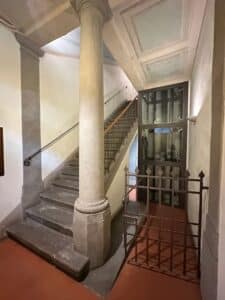
I always confirm elevator access, limited step entry, and the bathroom setup, especially the shower. A stylish bathtub doesn’t help if getting into it feels like an obstacle course after a long day. We only stay where there is at least one easy-entry shower. - Think about the return at night
Laura and I ask ourselves how it will feel to get back in the evening, when I’m tired and less steady. That single question has helped us avoid more than one bad booking.
These are traveling with limited mobility tips we learned by arriving exhausted one too many times and deciding we didn’t need to repeat the lesson.
Getting around on the ground: transit, taxis, and tours
How we move through a city matters just as much as where we sleep. Laura and I have learned that traveling with limited mobility often comes down to choosing the option that preserves energy, even if it isn’t the cheapest or most “local” choice.
- Use public transit strategically
I’m happy to take buses, trams, or metros when stations are close together and clearly marked. If reaching the platform requires long stairways or confusing transfers, we switch plans without guilt. - Treat taxis as a tool, not a failure
Short taxi rides can save miles of walking and keep the day enjoyable. We use them to bridge gaps between neighborhoods or to get home when my stamina or grit is done for the day. - Ask tour operators specific questions
Before booking, we confirm walking distance, seating, and pacing with tour operators. Tours that build in pauses or offer smaller groups tend to work better for us.
Choosing transportation this way lets us stay engaged with the place we’re visiting, rather than being focused on simply getting through the day.
Sightseeing without burning out: priorities, pauses, and paces
Sightseeing looks different for us now, and I’m at peace with that. When traveling with limited mobility, the goal isn’t to see everything; it’s to see a few things well, without ending the day completely spent.
- Choose depth over coverage
We’d rather spend time with one church, gallery, museum, or neighborhood than rush through five. Slowing down helps me move more carefully and helps both of us notice details we used to walk right past. - Sit early and often
Laura is quick to spot benches, low walls, or quiet corners where we can pause. Those short rests extend the day far more than pushing through discomfort. - Work in short, focused windows
I plan museum visits and historic sites in two-hour blocks, knowing that attention and balance fade long before interest does. Leaving while I still feel good is a win.
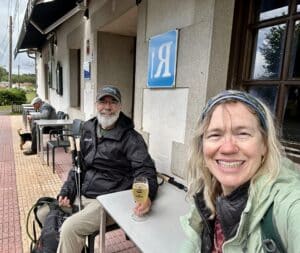
These choices don’t limit our travel; they sharpen it, keeping curiosity alive without draining what little energy the day allows.
What limited mobility taught us about travel
I didn’t expect limited mobility to change how I see travel, but it has. Once movement required more thought, everything else seemed to slow down in a good way.
- The café becomes part of the destination
Sitting with a coffee or tea, watching a neighborhood wake up or wind down, feels just as meaningful as ticking off another sight. - Asking for help isn’t a failure
Whether it’s a staff member pointing out an elevator or a stranger holding a door, I’ve learned that accepting help makes travel smoother, not smaller. A genuine smile is widely accepted as payment for help across cultures. - Adventure doesn’t require constant motion
Some of our favorite moments now happen when we stop moving altogether, on a bench, on a boat, or at the end of a quiet street.
Traveling with limited mobility has narrowed some options, but it’s deepened our experience in ways I didn’t anticipate.
Things we wish we’d done sooner
This is the section I think about most when we’re packing in the days before a trip. None of these lessons are complicated, but all of them would have saved us energy and a fair amount of frustration had we learned them earlier.
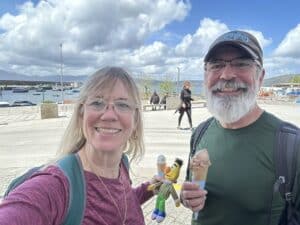
- Pack lighter than you think you need to
Every extra item adds weight, decisions, and strain. Traveling with limited mobility has taught me that simplicity isn’t minimalism, it’s stability. - Rethink how weight sits on your body
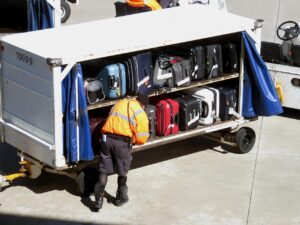
I no longer carry a backpack carry-on. Weight held high on my body throws off my balance and makes walking harder, especially in crowded spaces. A small rolling bag or splitting the weight between us works far better. - Accept a slower pace without fighting it
This was the hardest adjustment for me. Letting go of old rhythms took time, but once I stopped resisting, travel became calmer and more enjoyable for both of us.
These aren’t dramatic changes. They’re modest adjustments, learned slowly, that have made the biggest difference in how we experience travel.
Closing thoughts: travel didn’t stop, it changed shape
Travel looks different for us now, but it hasn’t lost its meaning. If anything, it’s become more intentional. Laura and I still plan carefully, still get excited about maps and calendars, and still experience the thrill as we head toward new places. I’ve learned that traveling with limited mobility isn’t about lowering expectations, it’s about redefining what a good day on the road actually looks like.
If you’re navigating similar changes, I hope our experience offers more reassurance than instruction. You don’t have to have everything figured out before you go. Start where you are, adjust as you learn, and give yourself permission to travel in a way that fits your body now, not the one you remember. If this resonates, I’d love to hear what’s worked for you, or where you’re feeling unsure. That conversation is often where the best ideas come from.


Thanks for sharing. I appreciated learning how thoughtful planning and pacing can make travel with limited mobility more enjoyable and empowering.
Susye, thank you for reading and leaving a comment. We’ve learned that slowing down and planning can turn challenges into really meaningful travel experiences. I’m glad the post resonated with you, and I appreciate you taking the time to say so.
It pulled me in right away. Your story telling writing is absolutely beautiful. I felt like I was right there with you. Looking forward to reading more. Thanks for sharing!
Mary Ann, thank you so much for taking the time to say that. It truly means a lot to me. Writing pieces like this is deeply personal, and knowing it made you feel there with us is the best compliment I could receive. I’m grateful you read it, and I’m glad you’re along for the journey.